Ella Train Ride Sri Lanka: How to Book in 5 Easy Steps (2026)
Ella Train Ride Sri Lanka: How to Book in 5 Simple Steps
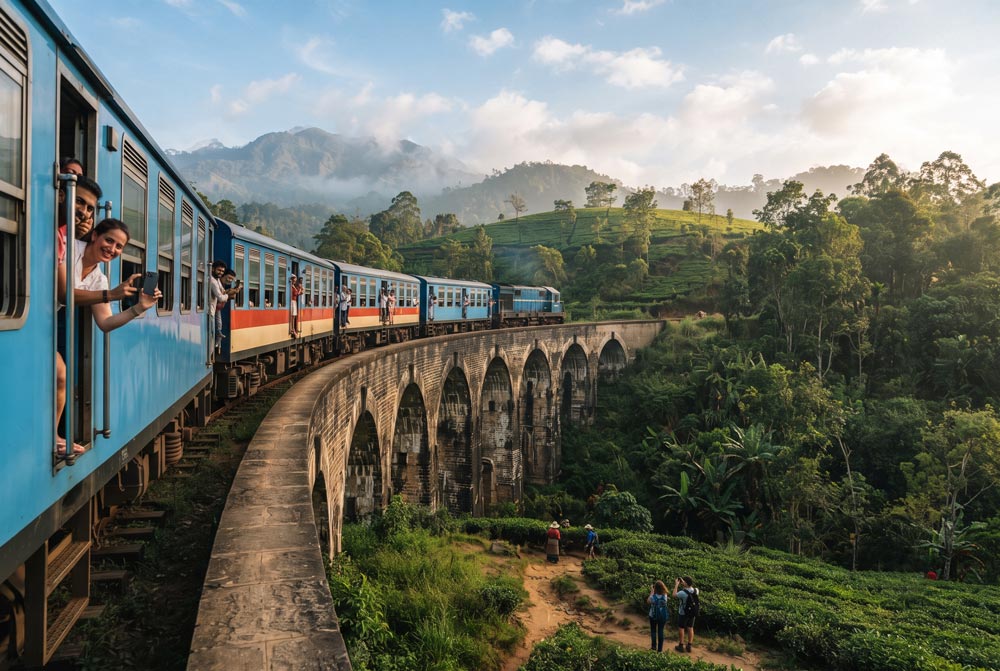
It’s been called the most beautiful train journey on the planet, and for once the internet isn’t exaggerating. If you’ve been searching for Ella train ride Sri Lanka how to book, you’ve probably also seen the photos: blue carriages curling through tea estates, mist sliding over eucalyptus forests, travellers leaning from open doorways with grins they can’t suppress. The ride is cheap, slow and utterly wonderful. The booking process, though? That’s where good trips go sideways, because seats on the famous stretch sell out fast in season.
So let’s fix that. Five steps, start to finish, plus the little details that decide whether you spend four hours by an open window or standing in a corridor next to someone’s rice sacks. Both are memorable, mind you. Only one is comfortable.
Step 1: Choose Your Stretch (Kandy to Ella Is the Classic)
The full hill country line runs from Colombo up to Badulla, but the celebrated section is Kandy to Ella, roughly six and a half to seven hours of tea country, tunnels and viaducts. Short on time? The Nanu Oya to Ella leg, about three hours, condenses the prettiest scenery, and Nanu Oya is the station for Nuwara Eliya, the misty former British hill station where you can sleep among tea estates the night before. Riding toward Ella rather than away from it saves the best for last: the train eases across the Nine Arch Bridge and around the famous Demodara loop, where the track spirals under itself like a party trick from 1923.
Which side to sit? Honestly, the views swap sides constantly, so don’t lose sleep over it. If pushed, the right side heading to Ella edges it for valley panoramas.
Step 2: Pick Your Class (This Matters More Than You Think)
Sri Lankan trains offer three classes, and the differences are real.
- First class: reserved seats, air conditioning, sealed windows. Comfortable, but sealed windows mean glass between you and the scenery, and no doorway photos.
- Second class reserved: the sweet spot for most travellers. Padded seats, fans, windows that open wide, access to the open doors.
- Third class and unreserved carriages: cheapest, liveliest, and standing room only when busy. Brilliant for short hops and local conversation, tiring for seven hours.
Here’s the counterintuitive bit: many seasoned travellers actively avoid first class. The sealed windows that sound luxurious are exactly what you don’t want on a journey that’s all about hanging half out of the carriage smelling the tea. Second class reserved wins for the classic experience. There, we said it.
Step 3: Book 30 Days Ahead Through the Official Channel
Sri Lanka Railways opens reservations 30 days before departure, online and at major stations. Seats for the Kandy to Ella morning trains in high season, December through March especially, can vanish within a day or two of release. Set a reminder for exactly 30 days out, book that morning, and the whole thing costs less than a decent pizza. Reserved second class typically runs a few dollars, first class slightly more; prices shift with fuel costs, so check when booking rather than trusting last year’s blog posts.
You’ll need passport details for each passenger, and you’ll receive an electronic ticket or a reference to collect at the station. Keep a screenshot offline; hill country signal comes and goes like the mist.
Step 4: No Seats Left? You Still Have Good Options
Sold out doesn’t mean game over. Aggregator platforms bundle train reservations with pickups and sell allocations the official site doesn’t show; Klook is a popular one for Asian rail and activity bookings, and travel planning platforms highlight that reserved hill country seats are among the most requested items in South Asia, so their allocations move quickly too. Beyond that, unreserved second class tickets are sold on the day, first come, first seated. Turn up 45 minutes early, board fast, and you’ll often grab a window. Worst case, you stand for a stretch, doors open, wind in your face, and honestly some travellers prefer it.
A tour operator can also hold seats as part of a wider itinerary, which quietly solves the 30 day maths when you’re booking a three week trip five months out. One of our recent guests from Wellington told us: “I used SLTO services for our whole hill country leg, and they had our reserved window seats confirmed before we’d even booked flights. The Nine Arch Bridge crossing with my wife was the highlight of our month.” That’s the outcome you’re after, however you get there.
Step 5: Plan the Day Itself Like a Local
- Arrive 30 minutes early; platforms are simple but signage is minimal.
- Buy snacks from the wandering vendors: wade (spiced lentil fritters), fresh pineapple with chilli salt, milk tea. It’s part of the ritual.
- Sit on the doorway steps only when the train is crawling, hold the rail, and never lean out at bridges or tunnels.
- Delays are normal and nobody minds. This is slow travel in its purest form; the timetable is more of a mood.
- Once in Ella, Little Adam’s Peak and the Nine Arch Bridge viewpoint are both walkable from town, so keep some legs in reserve.
| Route Section | Duration | Scenery Level | Best For |
| Colombo to Kandy | 3 to 4 hours | Pleasant | Getting upcountry |
| Kandy to Nanu Oya | 4 hours | Beautiful | Tea estate views |
| Nanu Oya to Ella | 3 hours | Spectacular | Short on time |
| Kandy to Ella (full) | 6.5 to 7 hours | The full epic | The classic experience |
| Ella to Badulla | 1.5 hours | Lovely | Demodara loop fans |
Infographic idea: a route ribbon from Kandy to Ella marking Nine Arch Bridge, Demodara loop, altitude profile and the 30 day booking countdown timeline.
What the Ride Actually Feels Like, Hour by Hour
Since you’ll be aboard for the better part of a day on the full route, it helps to know the rhythm. Leaving Kandy, the line climbs gently through spice gardens and small towns where children wave at the carriages like it’s still a novelty, because to them it somehow is. Past Hatton, tea country takes over completely: emerald slopes combed into neat rows, pluckers in bright saris moving between the bushes, factory chimneys puffing on the ridgelines. This is the stretch where everyone crowds the doorways. Around Pattipola the train crests the highest broad gauge station in the country at over 1,890 metres, and the air through the windows turns properly cool; bring a light layer, whatever the coast was doing that morning.
The final act into Ella is pure theatre. The track threads tunnel after tunnel, each one a few seconds of darkness and squealing brakes before the valley reappears wider than before. Then Demodara, where the engineer’s famous solution to an impossible gradient sends the line looping under its own bridge. Local legend says the design was inspired by a villager knotting his turban; engineers say gradient mathematics. Both stories are told with equal confidence, usually by the same guide.
Once You Arrive: Making Ella Worth the Journey
Ella town has grown from a sleepy junction into a lively backpacker hub, and it’s worth at least two nights. Little Adam’s Peak is an easy 45 minute walk to a ridge with views that punch far above the effort. The Nine Arch Bridge viewpoint cafés let you sip a milk tea while a blue train slides across the colonial era arches, the photo everyone came for. Ella Rock is the tougher half day hike for those with energy left, and the Ravana waterfalls tumble beside the road just out of town. Come evening, the main street hums with rooftop restaurants and live music. It’s touristy, sure, but cheerfully so, and the surrounding valleys swallow the crowds within a ten minute walk in any direction.
When to Ride the Hill Country Line
One more planning note while we’re here. Weekends and Sri Lankan public holidays, especially full moon Poya days, fill the trains with local day trippers, so if your dates are flexible, ride midweek for a calmer carriage. Poya days also mean alcohol isn’t sold island wide, which catches a few visitors out at dinner in Ella. Neither is a problem; both are worth knowing before you’re standing on the platform wondering where everyone came from.
The highlands stay cooler than the coast year round, with January to April offering the clearest skies. The southwest monsoon months can drape the valleys in mist, which sounds like a downside until you watch clouds pour over a ridge like dry ice at a concert. Photographers quietly love it. Mornings are more dependable than afternoons in any month, which is one more argument for the early trains.
Frequently Asked Questions
For the Ella train ride Sri Lanka how to book at short notice?
Try aggregator platforms for released allocations, ask your hotel or tour operator, or simply buy an unreserved ticket on the day and board early. The train itself never sells out; only the reserved seats do.
How much do Kandy to Ella train tickets cost?
Reserved second class usually costs the equivalent of a few US dollars, first class somewhat more, and unreserved even less. It remains one of the world’s great travel bargains.
Is the observation carriage worth it?
The rear observation saloon gives a wide back window and a touch of nostalgia. It’s fun, but window opening second class arguably delivers a better sensory experience for less money.
Can I ride with luggage?
Yes. Overhead racks handle backpacks and medium cases fine. For big suitcases, many travellers send bags ahead with their driver and ride the train light. Best of both worlds.
Which stop is best for the Nine Arch Bridge?
Ella station. The bridge is a 30 to 40 minute walk or a short tuk tuk hop away, and timing your visit to watch a train cross the arches is the classic move.
Final Thought
Booking is the only unromantic part of this whole experience, and now it’s handled. Reserve at the 30 day mark, choose second class with the windows down, and keep your camera ready but your eyes readier. Some journeys are transport. This one is the destination.
