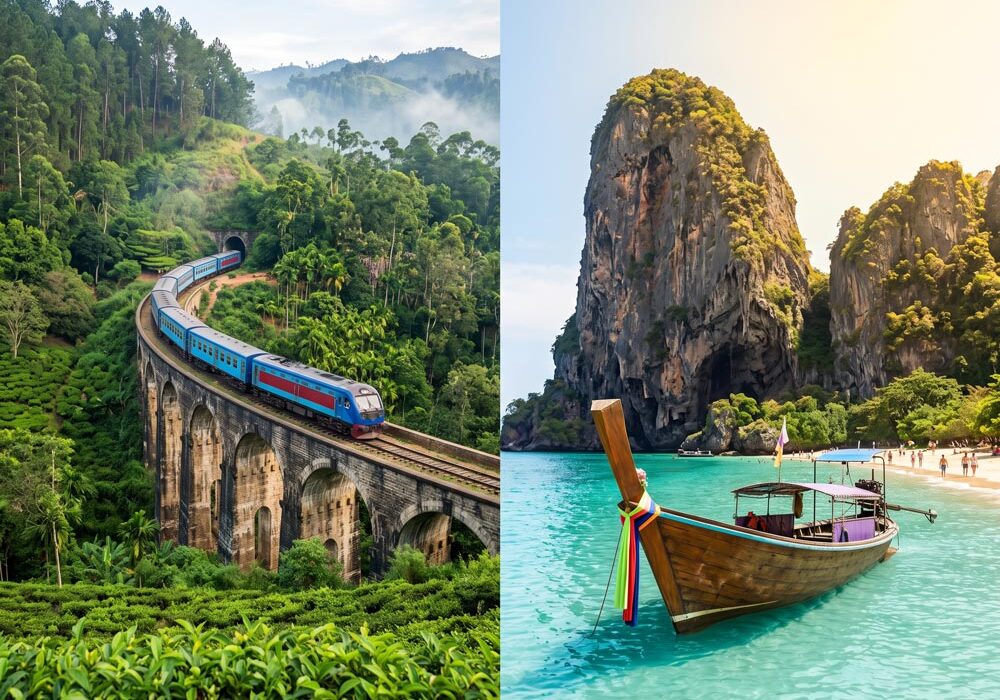
Sri Lanka vs Thailand 2026: 8 Real Differences
Sri Lanka vs Thailand 2026: 8 Real Differences to Know Before You Book
Sri Lanka vs Thailand is the question many European travellers ask when they plan a winter escape to Asia. Both have warm beaches, great food and friendly people. Both feel exotic without being impossible to navigate. Yet the two trips feel very different on the ground. The right choice depends on what you want from your holiday.
This guide covers eight differences that matter in practice. We look at size, cost, beaches, food, wildlife and culture, weather, getting there and entry rules. By the end you should know which one suits your dates, your budget and your travel style.
1. Size and Pace: Sri Lanka vs Thailand in One Look
Thailand is huge. It covers about 513,000 square kilometres, with bustling cities in the north, famous islands in the south and a lot of distance in between. Sri Lanka is much smaller, around 65,000 square kilometres, and that changes the whole feel of a trip.
In Sri Lanka you can pass through ancient ruins, misty tea hills, a wildlife park and a beach in a single two week route. Distances look short on a map, though the roads are winding, so a 120 km drive can still take three hours. That is part of the charm. The island rewards a slower pace, and it works well with a private driver who handles the roads for you.
Thailand suits people who like variety on a bigger scale. You can spend a week in Bangkok and Chiang Mai, then fly to an island for another week. Domestic flights are cheap and frequent. The trade off is more time spent in airports and more places to fit into the plan.
2. Cost: Where Your Money Goes Further
Both are friendly on the wallet compared with Europe. The gap between them is smaller than most people expect. One comparison site puts mid range daily spending at about 60 dollars in Sri Lanka and 70 in Thailand. It lists hotels from around 36 dollars versus 42. Restaurant meals run a little cheaper in Sri Lanka. Treat these as rough guides, because prices swing with season, hotel level and travel style.
What really changes your budget is how you travel. In Sri Lanka, a private driver guide is the biggest single cost, but it also removes the need for taxis, trains and tours. In Thailand, you may spend more on domestic flights and island ferries. Tourist hot spots in both countries cost more than quiet corners.
Want a full breakdown for Sri Lanka? Our Sri Lanka trip cost guide for 2026 shows a realistic budget, including the extras people forget.
3. Beaches: Quantity vs Character
Thailand wins on sheer number of famous beaches. The islands of the Andaman Sea and the Gulf of Thailand look like postcards. Think limestone cliffs, turquoise water and plenty of beach clubs. If you want a lively resort scene and endless boat trips between islands, Thailand delivers.
Sri Lanka’s beaches have a different personality. The south coast around Mirissa, Unawatuna and Tangalle has golden sand, palm trees and a relaxed rhythm. You will find surf breaks, quiet bays and fishing boats at sunrise. The coastline is less developed, which many travellers see as a bonus. There are fewer party scenes and more places to simply sit and watch the waves.
The short version is this. Thailand has more beach variety and more nightlife. Sri Lanka has quieter beaches that you can easily combine with culture and wildlife on the same trip. If your holiday is mostly about sand and sea, Thailand has the edge. If you want sand plus something else, Sri Lanka makes a strong case.
4. Food: Street Stalls vs Spice
Both countries take food seriously, and you will eat well in either one. Thai cuisine is famous worldwide for its balance of sweet, sour, salty and spicy. Pad thai, green curry and mango sticky rice are just the start, and the night markets are a highlight of any visit.
Sri Lankan food is bolder and spicier, built on coconut, curry leaves, chilli and fresh seafood. A rice and curry meal arrives with half a dozen small dishes, each with its own flavour. Hoppers, string hoppers, kottu roti and fresh fruit juices round out the picture. Vegetarians will find plenty to love, since vegetable curries are a staple.
Thailand has a more famous food scene and a bigger range of international options. Sri Lanka feels more homely and less polished, and many travellers enjoy the surprise. If you are a spice lover who wants to try something less familiar, you may prefer Sri Lanka.
5. Wildlife and Culture: Sri Lanka’s Secret Advantage
This is where Sri Lanka punches well above its size. Within a few hours of each other you can see wild elephants at Udawalawe, leopards at Yala and blue whales off the south coast. Few countries pack that much big wildlife into such a small space. Birdlife is rich too, and a surprising number of animals are easy to spot from a safari jeep.
The cultural side is just as strong. Sri Lanka has eight UNESCO World Heritage Sites. They include the rock fortress at Sigiriya, the sacred city of Anuradhapura and the old fort at Galle. The famous train ride through tea country near Ella is a highlight in its own right. Add the Temple of the Tooth in Kandy, and a cultural trip here can fill two weeks without repeating itself.
Thailand has temples, palaces and festivals in plenty, and Bangkok alone could occupy you for days. But big wildlife encounters, in a natural setting, are harder to find. Elephant sanctuaries exist, though standards vary, so it pays to choose carefully. For nature lovers, Sri Lanka has the clearer advantage.
I used SLTO planning services like this for my own comparison trip a few years back. What stood out was how much we fitted into ten days without feeling rushed. Our travellers are really happy with that mix of safari, culture and beach. One traveller told us afterward, we expected a beach holiday and came home feeling like we had seen three countries.
6. Weather: Two Monsoons vs Two Coasts
Weather is where both places need a little planning. Sri Lanka has two separate monsoon systems, which means one coast is usually dry while the other is wet. The south and west coasts shine from roughly November to April, with the best stretch in December through March. The east coast does the opposite, doing best from about May to September.
Thailand also splits by coast. The Andaman side, with islands like Phuket and Krabi, has its best weather from about November to April. The Gulf side, with Koh Samui, has a different rhythm and tends to stay drier later in the year. The north has its own cool season and a hot, smoky stretch in spring.
For a European winter escape, both destinations work well from late November to March. One comparison page puts the best window at November to February for Thailand and December to March for Sri Lanka. The main difference is flexibility. Sri Lanka’s two coasts alternate seasons. So you can usually find sunshine somewhere on the island in almost any month. That helps if your dates are fixed.
7. Getting There From Europe
Thailand has long been the easy option. Many European cities have direct flights to Bangkok, and the trip takes around 11 hours from the UK. Competition keeps fares reasonable, and the choice of airlines is wide.
Sri Lanka has been harder to reach, but that is changing. Recent disruptions around Gulf transit hubs made some Europeans nervous about connecting there, and that pushed more interest towards nonstop options. British Airways starts nonstop flights from London Gatwick to Colombo on 23 October 2026. They run three times a week through the winter season. French Bee plans seasonal Paris Orly flights from 19 December 2026, and Edelweiss has listed Colombo in its 2026/27 winter schedule. Schedules change, so always check with the airline before you book.
Even with these new flights, Thailand still has more direct choice from more cities. Sri Lanka usually adds a connection, though it is now easier to avoid the Gulf if you prefer. For help picking a route and dates, a local planner can compare current options for you.
8. Entry Rules and Planning Ahead
Entry rules can change, so always check official sources before you fly. For Sri Lanka, a free 30 day tourist ETA became available on 25 May 2026. It covers 40 countries, including the UK, France, Germany, Italy, the Netherlands, Spain, Switzerland and Poland. It allows double entry within the 30 days, but you still need to apply for the ETA online before you travel.
According to official Sri Lanka tourism sources, the free ETA took effect on 25 May 2026, and every traveller still has to apply online before arrival. For the Thai side, the Tourism Authority of Thailand website is a good place to start. Thailand’s rules for European visitors have shifted in recent years, so confirm the current length of stay before you commit.
Whichever you choose, apply early, keep a printed copy, and make sure your passport has enough validity left. For a deeper look at how Sri Lanka compares with another popular beach destination, see our Sri Lanka vs Bali comparison.
So Which One Should You Choose?
Choose Thailand if you want a lively beach scene, a huge choice of islands, big city energy and easy direct flights. It suits first time Asia travellers and groups who want nightlife and variety.
Choose Sri Lanka if you want wildlife, history, tea hills and beaches all in one compact trip. It suits couples, families and curious travellers who prefer a quieter, more personal pace. It also rewards a private driver, since the roads are slow and the sights are spread across the island.
There is no wrong answer. The best trip is the one that matches your interests and your dates. If you are still torn, ask yourself one question. Do you want to relax in one place, or see a lot of different things in two weeks? Your answer will usually point the way.
Frequently Asked Questions
Is Sri Lanka cheaper than Thailand?
Slightly, in most comparisons. One comparison site puts mid range daily costs near 60 dollars in Sri Lanka and 70 in Thailand. Your real spending depends on hotel level and how you travel.
Which has better beaches, Sri Lanka or Thailand?
Thailand has more famous islands and a livelier beach scene. Sri Lanka has quieter, less developed beaches that pair easily with culture and wildlife.
What is the best time to visit Sri Lanka compared with Thailand?
Both do well from November to March. Sri Lanka’s south and west coasts peak from December to March, while its east coast does best from May to September.
Do I need a visa for Sri Lanka as a European?
Citizens of 40 countries can get a free 30 day tourist ETA with double entry. These include the UK, France, Germany, Italy and the Netherlands. You still need to apply online before you travel, and rules can change.
Are there direct flights from Europe to Sri Lanka?
Yes, on some routes. British Airways plans nonstop London Gatwick to Colombo flights from 23 October 2026, and French Bee plans seasonal Paris flights from December. Always check current schedules.
