Best Time to Visit Sri Lanka from Italy – 2026 Guide
Best Time to Visit Sri Lanka from Italy: A Season by Season Guide for 2026
Best time to visit Sri Lanka from Italy is a question that comes up a lot more often these days, and there is a genuinely good reason for that. Italy has quietly become one of Sri Lanka’s fastest growing source markets, now sitting among its top fifteen countries for international arrivals, and the appeal makes sense the moment you look at a map. Ancient temples, layered history, food that people actually argue about, a slower pace once you get off the main roads, Italian travellers tend to feel oddly at home here.
So when should you actually go? Short answer, it depends on whether your trip lines up with Ferragosto, Natale, Pasqua, or a quieter window in between, since Sri Lanka runs on two separate coastal weather systems rather than one single season. Let us walk through how Italian holiday patterns match up with the island’s calendar, month by month, so you can pick dates that actually work rather than guessing.
Why Italy and Sri Lanka Line Up Better Than You Would Expect
Here is the thing that surprises a lot of first time visitors from Italy. Sri Lanka is roughly the same distance from the equator on the opposite side, small, island shaped, layered with history going back thousands of years, and genuinely obsessed with food the way Italy is. It is not a stretch to say the cultural rhythm feels familiar even though the language, food and landscape are completely different.
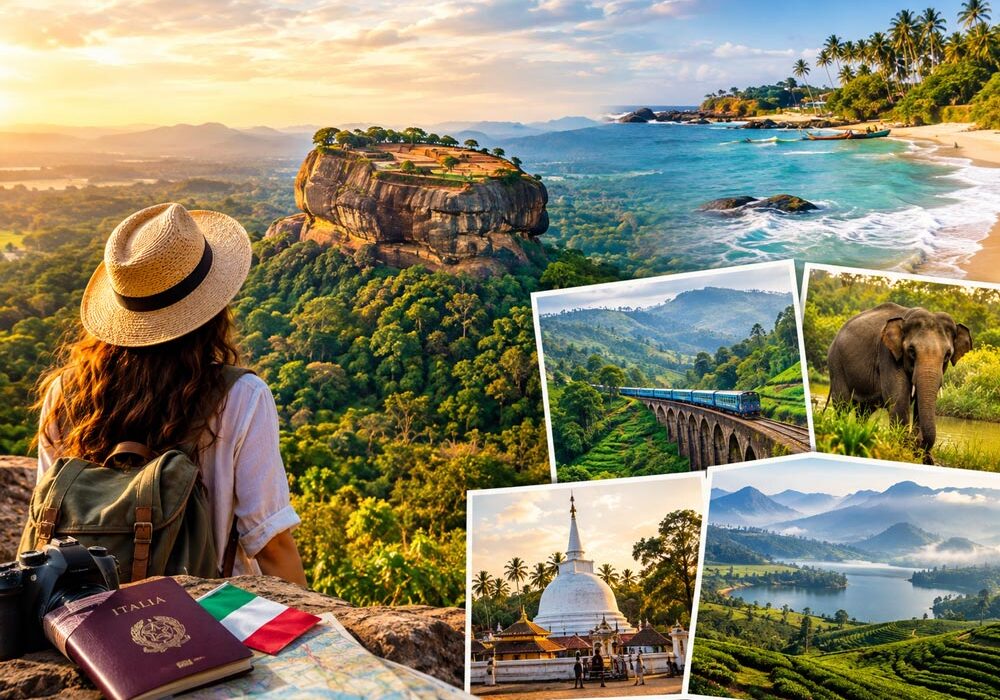
Travel planning platforms highlight that Italian visitors increasingly favour Sri Lanka for exactly this mix, beaches for the classic holiday, ancient cities like Sigiriya and Polonnaruwa for the culture lovers, and enough variety packed into a small island that a two week trip rarely feels repetitive.
Best Time to Visit Sri Lanka from Italy, Matched to Your Actual Holidays
Getting the timing right really comes down to matching Sri Lanka’s two coasts to when Italians actually have time off, so let us break this down by the holidays that matter most.
Ferragosto, that long mid August stretch when much of Italy shuts down and heads for the coast, happens to fall right in the middle of Sri Lanka’s east coast dry season. Arugam Bay, Trincomalee and Nilaveli are at their sunniest and calmest roughly between May and September, while the west and south coasts are dealing with their own monsoon during that same window. If your August free weeks are locked in, the east coast is where you want to point your compass.
Natale and Capodanno, the Christmas and New Year period, land almost perfectly inside the west and south coast peak season. Bentota, Galle, Mirissa and the whole southern stretch hit their best weather roughly from December through March, so a winter escape from Italy timed around the holidays genuinely works in Sri Lanka’s favour too.
Pasqua, being a moveable spring holiday, usually lands in a shoulder window, still workable on the south coast as the dry season winds down, with hill country towns like Nuwara Eliya offering a cooler, greener alternative if the coast feels uncertain that particular year.
The Month by Month Breakdown
Breaking the year into simple blocks makes planning considerably less confusing.
December through March favours the west and south coasts, calm seas, dependable sun, and the busiest, most festive stretch of the Sri Lankan tourism calendar.
April and May sit in a transition zone, the south winding down as the east coast starts waking up, generally a quieter, more flexible window for travellers whose dates are not fixed to a specific holiday.
June through September belongs to the east coast, consistent sunshine, warm water, and noticeably fewer European visitors than the winter months, which some travellers actually prefer.
October is the trickiest month for both coasts, caught between two monsoon systems, though short trips built around the cultural triangle rather than the beach tend to work regardless of coastal weather.
What a Trip From Italy Actually Looks Like
A well paced two week trip from Italy typically opens in Colombo, moves through the cultural triangle for a few days around Sigiriya and Polonnaruwa, climbs into the cooler hill country, then finishes with several days on whichever coast matches the season. It is a rhythm that suits Italian travellers particularly well, since it mirrors the way many Italian holidays already work, city and culture first, relaxation at the end.
Given how much Italians value history and craftsmanship, ancient rock fortresses and centuries old irrigation engineering tend to land especially well. The Sigiriya destination guide is worth a look early in your planning, since that single site often becomes the trip’s centrepiece in traveller feedback, the kind of place people describe as genuinely worth the climb.
I used SLTO planning services like this for a group of Italian travellers earlier this year, and the detail that mattered most to them was pacing, enough time at each stop to actually absorb it rather than rushing between photo points. Our travellers are really happy with our culture forward itineraries, and one traveller from Milan told us afterward, we expected beaches and got an entire civilisation, which was honestly the nicest surprise of the trip.
Honeymoons and Slower Travel From Italy
A fair number of Italian couples treat Sri Lanka as a honeymoon destination, and it holds up well against more predictable choices. Beaches, wellness stays in the hill country, private dinners on the coast, and enough cultural depth to keep both partners engaged rather than one person quietly checking their phone by the pool.
If that sounds like the trip you are picturing, the honeymoon tour collection shows how these itineraries typically balance romance with the kind of movement and discovery that keeps a two week trip interesting rather than repetitive.
Visas, Flights and the Practical Side
Good news on the paperwork front. Following a 2026 policy update, Italian citizens currently qualify for a fee free thirty day tourist visa with double entry permitted, part of a wider list of more than forty eligible countries. It is worth confirming your specific situation through the official Sri Lanka ETA portal before booking flights, since eligibility rules can shift and it only takes a few minutes to check.
Flight routing from Italy generally involves one connection through a Gulf or Southeast Asian hub, which keeps total travel time reasonable for a country that is, geographically speaking, a genuinely long way from Colombo. Booking that connection a few months ahead, rather than a few weeks, tends to open up noticeably better fares, particularly around the Natale and Ferragosto windows when demand from across Europe climbs sharply.
Food, Language and Small Cultural Notes Worth Knowing
Since food tends to matter enormously to Italian travellers, it is worth setting expectations early. Sri Lankan cuisine leans heavily on rice, coconut and a spice profile that is nothing like Mediterranean cooking, chilli forward curries, hoppers, and seafood grilled with a completely different set of flavours than anything from an Italian coastal town. Most travellers end up loving it, though a few pack a small stash of familiar snacks for the first couple of days while their palate adjusts, which is a perfectly sensible thing to do.
English is widely spoken across hotels, tour operators and most restaurants in tourist areas, so language rarely becomes a real obstacle, even for travellers whose English is more functional than fluent. A handful of Sinhala greetings go a long way with locals though, the same way a few words of Italian would be appreciated by anyone visiting Rome.
One more note worth passing along, dress modestly when visiting temples, shoulders and knees covered, shoes removed at the entrance. It is a small adjustment that Italian visitors, coming from a country with its own deep religious architecture and etiquette, tend to pick up naturally without much explanation needed.
So, When Should You Actually Book Your Flights?
If your holiday dates are fixed around Ferragosto, aim east, Natale and Capodanno are your window, the south and west coasts will not disappoint. If you have more flexibility, February and March quietly offer some of the best weather to crowd ratio on the entire island, worth considering even if it means travelling slightly outside the obvious holiday windows.
Whichever month works for your calendar, the island rewards a bit of planning far more than a spontaneous last minute booking, and that is true whether you are coming from Rome, Milan, Naples or anywhere else across Italy.
Think of it a little like choosing when to visit Sicily versus the Dolomites, the calendar matters just as much as the destination itself, sometimes more. Sri Lanka simply asks you to think in terms of two coasts instead of one country, and once that clicks, the rest of the planning tends to fall into place fairly naturally.
Frequently Asked Questions
What is the best time to visit Sri Lanka from Italy for good weather? It depends on your coast. December through March suits the west and south coasts best, while June through September favours the east coast, since Sri Lanka’s two coastlines follow opposite monsoon patterns.
Does Ferragosto in August work well for a Sri Lanka trip? Yes. August falls within the east coast’s dry season, making destinations like Arugam Bay and Trincomalee a strong match for Italy’s traditional mid August holiday period.
Do Italian citizens need a visa to visit Sri Lanka? As of a 2026 policy update, Italian citizens currently qualify for a fee free thirty day tourist visa with double entry, as part of a list of more than forty eligible countries, though it is worth confirming current requirements before booking.
How long is the flight from Italy to Sri Lanka? Most routes involve one connection through a Gulf or Southeast Asian hub, with total travel time typically landing somewhere between twelve and sixteen hours depending on the layover.
Is Sri Lanka a good honeymoon destination for Italian couples? Yes. It combines beaches, wellness stays and cultural depth in a way that suits couples wanting more than just a beach holiday, with itineraries that can be paced around both relaxation and exploration.
