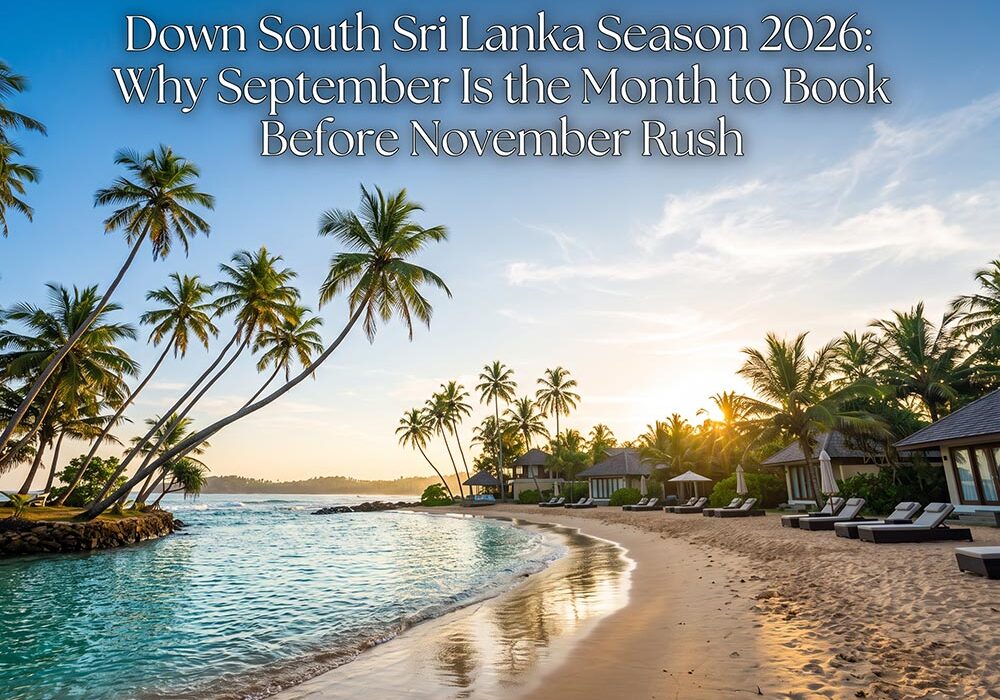
Down South Sri Lanka Season 2026: Book Before November
Down South Sri Lanka Season 2026: Why September Is the Month to Book Before November Rush
Down south Sri Lanka season 2026 has not technically started yet, and that is exactly the point of this article. The south coast does not properly wake up until November, but the smartest travellers, the ones who get the good villas at the fair price and skip the scramble, are booking right now, in September. Funny how that works. Everyone waits for the season to feel real before they act, and by then the best rooms in Mirissa and the quiet corners of Tangalle are already gone.
So here is what actually happens along that stretch of coast between Bentota and Tangalle, when it happens, and why locking in your dates this month puts you ahead of a crowd that has not even started looking yet.
What Down South Sri Lanka Season 2026 Actually Means
Ask five different travellers what down south means and you will get five slightly different answers, but broadly it refers to the southern coastal belt, Bentota, Galle, Unawatuna, Weligama, Mirissa and Tangalle, where the weather, the surf and the whole rhythm of tourism flips into gear once the southwest monsoon finishes its run.
That flip happens around November. From November through April, the south coast settles into calm seas, dependable sunshine and the kind of golden late afternoon light that makes every beach photo look slightly unreal. December and January are the busiest months, February and March quietly become the sweet spot for people who want good weather without elbow to elbow beach chairs, and by April things start easing off again as the pattern begins to reverse.
The South Coast Calendar, Month by Month
Knowing the shape of the season helps you decide when to actually go, not just when to book.
November opens the season gently. Prices are still reasonable, the crowds have not arrived, and the sea is settling after months of rougher swell.
December and January are peak, full stop. Warm water, dependable sun, and understandably, the highest rates and the fullest hotels of the year.
February and March might be the best kept secret on the whole coast. The weather holds, the wave to crowd ratio improves noticeably, and rates soften just enough to notice.
April is the transition month, still mostly good, occasional short showers creeping back in as the pattern starts to turn.
Why September Is Doing All the Talking Right Now
Here is the thing nobody tells you about seasonal travel. The best deals and the best room choices rarely happen during the season itself, they happen in the quiet weeks before everyone else starts paying attention. September sits in exactly that window.
Right now, in September, boutique guesthouses in Mirissa and beachfront villas near Tangalle still have their full calendar open. Come late October, that changes fast, since a huge share of travellers start their search six to eight weeks before their trip, which lines up almost perfectly with the November opening. Wait until then and you are choosing from whatever is left, often at a higher rate than someone who booked in September paid for the exact same room.
There is also a psychological piece to this, and it is worth naming honestly. Travellers tend to wait for a destination to feel like it is in season before they commit, as if booking early is somehow riskier. It rarely is. The weather pattern is remarkably consistent year on year, and locking in dates now simply means better choice, not more risk.
What You Are Actually Booking When You Book Early
Booking down south in September for a November or December trip is not just about beating a rush, it changes the actual experience you get once you arrive.
Early bookings get first pick of rooms with an actual sea view rather than the garden facing option that is all that is left by November. Drivers and guides who know the coast well, the difference between a good one and an average one is enormous, get snapped up early by travel planners who book ahead, leaving late bookers with whoever is still available. And smaller boutique stays, the ones with six or eight rooms rather than sixty, sell out first every single year, simply because there is so little inventory to begin with.
I used SLTO planning services like this for my own down south trip last December, and booking in September meant we landed a genuinely good beachfront room in Mirissa at a rate that had already crept up by the time friends asked about the same property in November. Our travellers are really happy with our early season down south itineraries, and one couple told us afterward, we assumed we were being paranoid booking so early, then watched prices for our exact villa go up twice before our trip even started.
Bentota to Galle: Picking Your Down South Base
Down south is not one single destination, it is a string of towns with genuinely different personalities, and picking the right base matters more than people expect.
Bentota suits travellers who want resort comfort, calm swimmable water and an easy introduction to the coast, without needing to move around much. If that sounds like your pace, the Bentota destination guide covers what a base there actually looks like day to day.
Galle offers something different entirely, a walkable fort town layered with colonial history, boutique cafes and a slower, more cultural rhythm than the beach towns further south. Couples and culture minded travellers often build a few days around the Galle Fort area before continuing down the coast toward the quieter stretches near Tangalle.
Mirissa and Weligama lean younger and more surf focused, while Tangalle rewards travellers who genuinely want to do less, fewer restaurants, fewer crowds, longer stretches of empty sand.
Surf, Sun and the Occasional Shower: Setting Expectations
Let us be honest for a second, since overselling any destination eventually backfires. Down south season does not mean guaranteed wall to wall sunshine every single day. Short, sharp showers can still pass through even in peak months, usually clearing within an hour. What changes is the pattern, consistent dry stretches instead of the sustained heavy rain that defines the southwest monsoon months earlier in the year.
According to the official Sri Lanka Tourism Board, the west and south coasts see their most consistent weather window roughly between December and March, which lines up closely with what locals along this coast will tell you if you ask them directly rather than trusting a single averaged forecast. Travel planning platforms highlight a similar pattern, generally framing November through April as the recommended window for this specific stretch of coastline.
None of this means you should chase a single perfect week and ignore everything else. Weather forecasting more than a month or two out is still mostly guesswork, even for the professionals who do it for a living. What the seasonal pattern gives you is a strong likelihood, not a guarantee, and honestly, that is about as good as beach planning ever gets anywhere in the world.
Down South Versus the East Coast: Do Not Mix Them Up
One mistake shows up again and again in early trip planning, confusing down south season with the east coast season, and they are almost exact opposites. While Bentota, Galle and Mirissa are heading into their best months from November, Arugam Bay and the east coast are winding down after their own peak, which runs roughly April through September.
That matters because a huge amount of generic travel advice online lumps the whole island together under one seasonal summary, when in reality Sri Lanka runs on two separate weather systems depending on which coast you are standing on. If your itinerary includes both coasts, and plenty of good ones do, timing each leg correctly makes a real difference to how much sunshine you actually see.
Planning Your Trip Before the Rush
If a down south trip is somewhere in your plans for this coming season, the practical move is simple, decide roughly which weeks work, then lock in accommodation now rather than waiting for the season to visibly begin. Families often find it useful to build the coastal leg into a broader route, pairing a few beach days near Tangalle with a handful of inland stops for balance.
There is no real downside to acting early here. Worst case, your plans shift slightly and you adjust dates with plenty of notice. Best case, you get the room with the actual view, the driver who knows every good stop along the Galle road, and a rate that has not yet crept up to match December demand. Down south season 2026 is going to happen with or without your planning, the only real question is whether you are booking from the front of the queue or the back of it.
Frequently Asked Questions
When does down south Sri Lanka season 2026 actually start? The south coast season generally begins in November, once the southwest monsoon eases off, and runs through to around April, with December through March offering the most consistent weather.
Why should I book down south accommodation in September if the season starts in November? Most travellers begin searching six to eight weeks before their trip, which means late October and November bookings compete for the same limited rooms. Booking in September usually secures better rooms and lower rates before demand picks up.
What is the best month to visit down south Sri Lanka for fewer crowds? February and March tend to offer the best balance, consistently dry weather with noticeably fewer crowds and slightly softer rates than the December and January peak.
Is down south Sri Lanka good for a honeymoon? Yes. Quieter towns like Tangalle and boutique stays around Mirissa suit couples well, particularly outside the busiest December and January weeks when things feel calmer and more private.
Which towns count as down south Sri Lanka? Down south typically refers to the coastal stretch from Bentota through Galle, Unawatuna, Weligama, Mirissa and on to Tangalle, each with a noticeably different pace and atmosphere.
