Is Sri Lanka Safe to Visit in 2026? 9 Key Facts
Is Sri Lanka Safe to Visit in 2026? 9 Things Every Traveller Should Know
Is Sri Lanka safe to visit in 2026? It is a fair question, and many European travellers are asking it right now. News of Gulf flight disruptions, a few weather events and internet horror stories can make any trip feel risky. So let us look at what is actually true.
The short answer is that most visitors have a smooth, friendly trip. The country welcomes millions of tourists, and serious problems are rare. But safe does not mean no risks. Roads are busy, the sea can be rough, and a few classic scams exist. This guide covers nine practical areas, so you know what to expect.
1. Is Sri Lanka Safe to Visit? What Official Advice Says
Governments publish travel advice for every country, and it is worth reading before you go. Australia’s Smartraveller service currently tells travellers to exercise a high degree of caution in Sri Lanka. It points to public demonstrations, road safety, dengue fever, severe weather and petty crime as the main concerns.
That sounds serious, but it is a common level for popular destinations. It is a nudge to stay alert, not a warning to stay home. The UK government also publishes its own advice, and it changes from time to time. You can read the latest on the UK foreign travel advice page for Sri Lanka, and I suggest checking it again a week before you fly.
Travel planning platforms highlight a similar picture. Tourists rarely run into trouble. The issues that do come up are everyday ones, such as traffic, heat and overcharging.
2. Crime: Mostly Petty, Easy to Avoid
Violent crime against tourists is uncommon. What you are more likely to meet is petty crime, such as pickpocketing and bag snatching, mostly in crowded places. Markets, bus stations and busy train platforms are the usual spots.
A few habits cut the risk. Keep your phone and wallet in a front pocket or a zipped bag. Do not leave valuables on a beach towel while you swim. Use the hotel safe for your passport and spare cards. Avoid walking alone on dark, empty streets late at night, as you would in any city back home.
If something does go wrong, tell your hotel or driver first. The local emergency number is 110, and the tourist police can help with reports for insurance. Having a copy of your passport on your phone makes everything faster.
3. Roads and Transport: The Biggest Real Risk
If you want to know where the real danger lies, it is the roads. Driving in Sri Lanka is hectic. Buses overtake on blind bends, tuk tuks weave through traffic, and animals wander across the road. Road accidents are a genuine concern for visitors and locals alike.
This is the strongest reason to travel with a professional driver. An experienced local driver knows the roads, reads the traffic and drives at a safe pace. Renting a car and self driving is something most visitors should skip, unless they have real experience in similar conditions.
Public buses are cheap but often fast and crowded, so many travellers skip them for long trips. Trains are far calmer, and the scenic routes are a highlight. Just do not hang out of open doors for a photo. If you want to ride the famous hill country line, book ahead and sit inside, not at the door.
4. Tuk Tuks and Common Tourist Scams
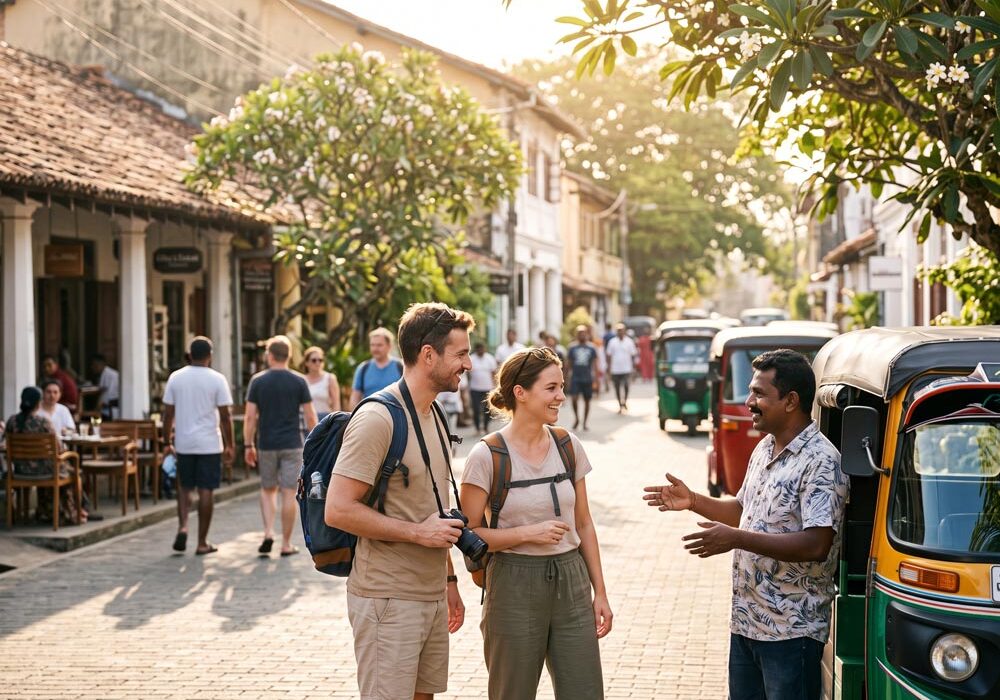
Scams in Sri Lanka are mild compared with some places, but they exist. The most common one is tuk tuk overcharging, especially near big sites and train stations. The fix is simple. Agree a price before you get in, or use a ride app in the cities so the fare is clear from the start.
Watch for the driver who says your attraction is closed and offers a better place instead. Check opening hours with your hotel. Some drivers also take you to a friend’s gem or spice shop, where you may feel pressure to buy. A polite no is enough.
Men posing as stilt fishermen sometimes ask for money after a photo, so settle the price first if you want a picture. And never buy baby milk powder for a stranger, a known trick that leaves you paying shop prices.
With a private driver guide, most of these problems disappear. They know the real prices, and they steer you away from the awkward moments.
5. The Sea: Beautiful but Strong
Sri Lanka’s beaches are a big draw, but the ocean deserves respect. Many popular beaches have strong currents and heavy waves, especially in the rougher months. Visitors do get into trouble in the water every year.
Swim only where you see other people swimming. Prefer beaches with lifeguards or calm bays. Never swim after drinking alcohol. If a rip catches you, stay calm and swim sideways, not against the current. Surfers should stay within their level or go with a local guide.
The best beaches change by season, which also affects safety. For ideas on calm, swimmable spots, see our guide to the best beaches in Sri Lanka, and check the flag or ask your hotel before you get in.
6. Health: Dengue, Water and Food
Dengue fever is present in Sri Lanka, and outbreaks can happen in every region. Mosquitoes spread it, with more cases in the wetter months. There is no need to panic, but a few steps help. Use repellent, wear light long sleeves in the evening, and sleep in an air conditioned room or under a net. See a doctor quickly if you get a fever.
Do not drink tap water. Use bottled or filtered water, and be careful with ice from street stalls. Eat at busy places where food is cooked fresh and served hot. High turnover usually means safer food. Sri Lankan cooking uses nuts, seafood and dairy, so tell the cook about any allergy.
Speak to a travel clinic or your doctor about vaccinations before you leave. Rules and recommendations change, and a professional can tailor advice to your health. Pack a small first aid kit too, and our Sri Lanka packing list for 2026 lists the essentials.
7. Weather and Natural Hazards
Sri Lanka has two monsoon seasons. Heavy rain can hit one part of the island while another stays dry. Floods and landslides do happen, mostly in the hill country during wet spells. Recent storms have left some areas still recovering, and a few roads may carry local warnings.
The good news is that this is easy to plan around. Choose the right coast for your dates and keep your schedule a little flexible. A local planner follows the weather daily and can switch your route if a road is closed.
I used SLTO planning services like this for my own family trip. A sudden storm on the hill country road would have wrecked a fixed plan. Our driver changed the day on the fly, so we lost nothing. Our travellers are really happy with that calm, flexible handling. One couple told us afterward, we never once felt stuck, even when the weather changed.
8. Solo Travellers, Women and Families
Many solo travellers, including women, visit Sri Lanka and enjoy it. People are friendly and helpful. Still, women travelling alone may face unwanted attention in crowded places such as markets, stations and buses, so a few habits help.
Dress modestly in towns and at religious sites, with shoulders and knees covered. Avoid walking alone at night, and stay in places with good reviews. Trust your instincts, and move to a busy spot if you feel uneasy. If you need to report harassment, you can call 1938, a hotline for that purpose.
Families do well here, especially with a private driver and a steady pace. Kids love the elephants, trains and beaches. Plan shorter driving days, carry water and snacks, and add rest time. A trip built around a few bases, not constant moving, keeps everyone happier.
9. Getting There and Entry Rules in 2026
Flights have been on many European minds this year. Disruptions in the Gulf hit some popular connections, so travellers grew cautious about routing through the region. There are now more choices. British Airways starts a nonstop from London Gatwick to Colombo on 23 October 2026, three times a week through winter. French Bee has also announced seasonal Paris flights from 19 December 2026. Always confirm schedules with the airline before booking.
For entry, Sri Lanka introduced a free 30 day tourist ETA on 25 May 2026. It covers 40 countries, including the UK, France, Germany, Italy, the Netherlands, Spain, Switzerland and Poland. It allows double entry, but you still need to apply online before you travel. Rules can change, so confirm them close to your date.
Take out travel insurance that covers medical care, cancellations and delays. It is cheap compared with the cost of a problem, and it gives you peace of mind from the moment you book.
A Simple Pre Trip Safety Checklist
A little preparation makes the whole trip calmer. Before you fly, check your government’s latest travel advice and apply for your ETA online. Buy travel insurance and read what it covers. Book your first night and your airport pickup, so you land without stress. Save your hotel address in English and in your phone, along with the emergency number 110.
Pack repellent, sunscreen, a refillable filter bottle and any regular medication in its original packaging. Keep copies of your passport and insurance in your email. Then relax. Most of the work is done, and the rest is the fun part.
So, Should You Go?
For most travellers, yes. Sri Lanka is a welcoming country with a big tourism industry, and thousands of visitors enjoy it safely every month. The real risks are ordinary ones. Take care on the roads, respect the sea, drink safe water and check official advice before you leave.
The best way to lower almost every risk is to travel with local help. A private driver, a flexible plan and a team that knows the island turn a list of what ifs into a relaxed holiday. Want to talk through your dates and route? We are happy to help.
Frequently Asked Questions
Is it safe to travel to Sri Lanka right now?
Most tourists travel without problems, but official advice currently urges a high degree of caution because of road safety, petty crime, weather hazards and possible demonstrations. Check your government’s latest advice before you go.
Is Sri Lanka safe for solo female travellers?
Many women travel solo and enjoy it, but harassment can happen in crowded places. Dress modestly, avoid walking alone at night and choose well reviewed accommodation. The hotline for reporting harassment is 1938.
What is the biggest safety risk for tourists in Sri Lanka?
Road traffic is the main risk, followed by strong sea currents. Using a professional driver and swimming only at safe, busy beaches reduces both.
Can I drink the tap water in Sri Lanka?
No. Stick to bottled or filtered water, and be cautious with ice. Eat at busy places where the food is freshly cooked.
Do I need travel insurance for Sri Lanka?
Yes, it is strongly recommended. Choose a policy that covers medical care, cancellations and delays, and read the terms for activities such as surfing or safaris.
