Best Safari in Sri Lanka 2026: 4 Parks Compared
Best Safari in Sri Lanka 2026: 4 National Parks Compared
The best safari in Sri Lanka depends entirely on what you hope to see. Some parks are famous for leopards, others for elephants, and one of them stages a wildlife gathering that looks like something from a documentary. Pick the wrong one for your dates and you can spend half a day staring at an empty plain. Pick the right one, and you will talk about it for years.
This guide compares four of the top choices side by side: Yala, Udawalawe, Wilpattu and Minneriya. We cover what each park is known for, when it works best, how crowded it gets and which kind of traveller it suits. We also show how to fit a safari into your route, so you are not driving all day for a three hour game drive.
Quick Answer: Which Is the Best Safari in Sri Lanka for You?
If you want the best chance of a leopard, choose Yala. If you want near certain elephants in open grassland, choose Udawalawe. If you want a quieter, wilder park with fewer jeeps, choose Wilpattu. If you want to see a large herd of elephants together in the drier months, look at Minneriya.
That is the short version. The rest of this guide explains why, and how to choose when your trip does not fit neatly into one category.
1. Yala National Park: The Leopard Park
Yala sits in the southeast of the island and is the most famous safari destination in Sri Lanka. It is divided into blocks, with Block I the most accessible and the one most visitors see. Yala is known for having one of the highest leopard densities in the world, which is why it attracts so many wildlife photographers.
The park is not only about leopards. You can also see sloth bears, elephants, spotted deer, crocodiles, jackals, peacocks and plenty of birds. Morning and afternoon drives last around 3 to 4 hours. The landscape shifts from scrub forest to open plains to rocky outcrops near the coast.
The downside is crowds. In peak season, Yala can feel busy, with a line of jeeps gathering when a leopard is spotted. That does not ruin the experience, but it changes the mood. To get the most out of it, go early, choose a guide with a good reputation, and stay patient. Leopards are cats, and cats do things on their own schedule.
Yala works best for travellers who put leopards at the top of the wish list and do not mind sharing a sighting. You reach the park from Tissamaharama. It fits neatly after Ella, about 60 km and an hour and a half by road.
2. Udawalawe National Park: The Elephant Park
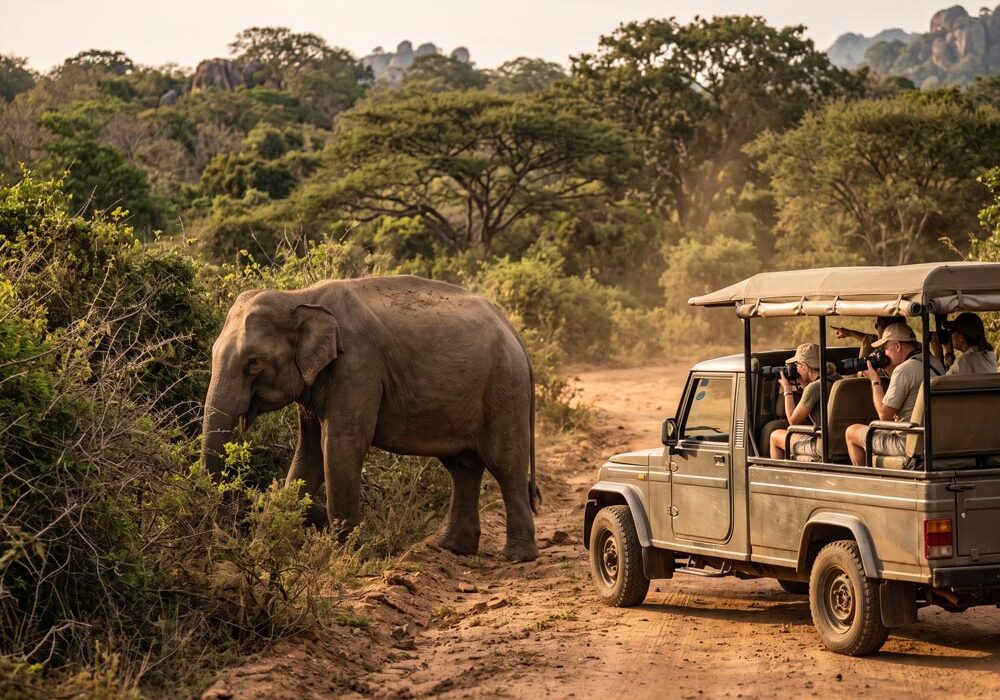
Udawalawe is the easy win. The park surrounds a large reservoir and spreads across open grassland, which makes wildlife much easier to see than in thick forest. It has a large elephant population, with several hundred animals living there, and sightings are almost guaranteed on a typical drive.
You will often see herds with calves crossing the track, drinking at the water or feeding in the long grass. Other regulars include water buffalo, sambar deer, monitor lizards, eagles, kingfishers and cormorants. Leopards live in the park but are rarely seen, so this is not the place to chase one.
Crowds are lighter than in Yala, and the drives are about 3 hours long. The park can be visited year round, with May to September often giving clear views. That flexibility makes it a reliable choice when your dates are fixed. Families with younger children often prefer Udawalawe, since there is plenty to see and little waiting.
Udawalawe is about two hours from Ella by road. That makes it a natural stop on the way down to the south coast. If you want a safari that delivers on the first morning, this is the one.
I used SLTO planning services like this for my own family trip. We picked Udawalawe for the first safari because the kids needed quick rewards. Our travellers are really happy with that approach. One mother told us afterward, we saw more than twenty elephants in one drive, and nobody asked how long until we were back.
3. Wilpattu National Park: The Quiet, Wild Choice
Wilpattu sits in the northwest. It is the largest and one of the oldest national parks in the country. It is known for its natural lakes, called villus, which dot the forest and attract wildlife. The park has leopards, sloth bears, elephants, deer, mugger crocodiles and more than 200 species of birds.
What makes Wilpattu special is the atmosphere. It is peaceful and uncrowded, with long stretches of forest track where you might not see another jeep for an hour. The flip side is that sightings take more patience. The park is huge, drives are longer between wildlife encounters, and leopards are shy and harder to find than in Yala.
The best months are generally February to October, and the park is usually reached from the Anuradhapura area. That makes Wilpattu a good partner for a cultural route through the ancient cities. Like exploring a wild place at your own pace? Happy with fewer guaranteed sightings? Then Wilpattu is a rewarding choice.
Travellers who have already done Yala often add Wilpattu as a second safari, since the two feel so different. One is dramatic and busy, the other calm and almost secret.
4. Minneriya National Park: The Gathering
Minneriya is best known for a seasonal event often called the Gathering. As the dry months arrive, other water sources shrink. Large numbers of wild elephants then come to the Minneriya reservoir to drink, bathe and feed on fresh grass. The result is one of the largest regular gatherings of Asian elephants in the world.
The timing matters. The Gathering usually peaks in the drier months, often August to October. The exact weeks change each year with the rainfall. Outside that window, Minneriya is still pleasant, but you will not see the same spectacle.
Wilpattu and Minneriya also pair well in one trip, since both sit in the north and centre of the island. A route that includes the cultural triangle, with Sigiriya, Anuradhapura and Polonnaruwa, can easily add Minneriya as an afternoon safari.
Because the best weeks vary, it is smart to check with a local planner before you lock in dates. If the Gathering is your main goal, book flexible arrangements and ask what the current conditions look like.
How the Four Parks Compare Side by Side
Here is the simple version, in plain words.
Yala is best for leopards, and it is the busiest. Udawalawe is best for elephants all year, and it is the easiest. Wilpattu is best for peace and wild atmosphere, and it needs the most patience. Minneriya is best for elephant herds in the drier months, and the timing matters most.
If you have time for only one park, choose based on your top priority. Leopards mean Yala. Elephants mean Udawalawe. Solitude means Wilpattu. A big herd means Minneriya in season. If you have time for two, combine a southern park with a northern one, since they give you completely different landscapes.
Practical Tips Before You Book a Jeep
Go early. Morning drives start at first light, when animals are most active and the air is cool. Afternoon drives work too, but the light fades quickly and the heat can make animals hide.
Choose a reputable guide. The driver and tracker make a huge difference. A good one knows where to look, reads the signs and keeps a respectful distance from the animals. Ask about group size and whether you share the jeep, since a private jeep gives you more control and fewer elbows.
Follow park rules. Stay in the vehicle, keep your voice low, and never feed or call out to the animals. Park fees and rules are set by the authorities, and they protect the wildlife that you are there to see. The Department of Wildlife Conservation publishes information on its official website, and rules can change, so it helps to check before you go.
Dress for the weather. Wear neutral colours, a hat and sunscreen. Bring binoculars if you have them, a camera with a zoom lens, and plenty of water. Dust is normal, so a light scarf helps.
According to official Sri Lanka tourism sources, wildlife is one of the island’s biggest draws. That is why parks run rules to protect the animals and manage visitor numbers. Parks sometimes close for short periods for maintenance or to protect wildlife, so confirm opening dates before you finalise your plan.
Fitting a Safari Into Your Route
A safari does not need to take over your whole trip. Most travellers do one or two drives and spend the rest of their time on culture, tea country and the coast.
A common route goes from Kandy to Nuwara Eliya, then Ella. Next comes Udawalawe or Yala, and a few days on the south coast to finish. That sequence keeps driving times sensible and puts the safari at the right point, after the hills and before the beach. If you are curious about the train ride from the hills to Ella, our Ella train ride booking guide explains how it works.
If wildlife is your main reason for coming, you can explore our wildlife tour options to see routes built around the parks above.
Whatever you choose, allow a rest day after a long drive and an early safari. Travel on this island is slower than it looks, and a relaxed pace makes the experience better.
Frequently Asked Questions
What is the best safari in Sri Lanka for leopards?
Yala is the strongest choice, since it has one of the highest leopard densities in the world. Sightings are never guaranteed, so allow for more than one drive.
Which national park is best for elephants?
Udawalawe is the easiest, with open grassland and near certain elephant sightings on most drives. Minneriya is also excellent in the drier months, when large herds gather at the reservoir.
When is the best time for a safari in Sri Lanka?
It depends on the park. Yala is often best from February to July, Udawalawe works year round, Wilpattu is usually good from February to October, and the Minneriya Gathering often peaks between August and October.
Is a private jeep worth it?
For most travellers, yes. A private jeep gives you control over timing and stops, and it avoids sharing space with strangers. It costs more, but many people feel the experience is better.
Can I combine two parks in one trip?
Yes. Yes. Many travellers pair a southern park such as Yala or Udawalawe with a northern one such as Wilpattu or Minneriya. The landscapes feel completely different.
